Pasture House
Pasture House is a 1960s terraced property that lacked both spatial flow and strong connection to the rear garden. The ground floor was arranged as a series of small, dark rooms, with an underused garage to the front and a compact, enclosed kitchen to the rear. The garden itself presented a further constraint, with a noticeable slope limiting its usability for everyday living and entertaining.
The key challenge was to reconfigure the ground floor to create a more open and flexible living environment, while introducing a dedicated home office at the front of the house without compromising arrival space or natural light. At the same time, the rear of the property needed to be transformed into a usable extension of the living space despite the level change in the garden.
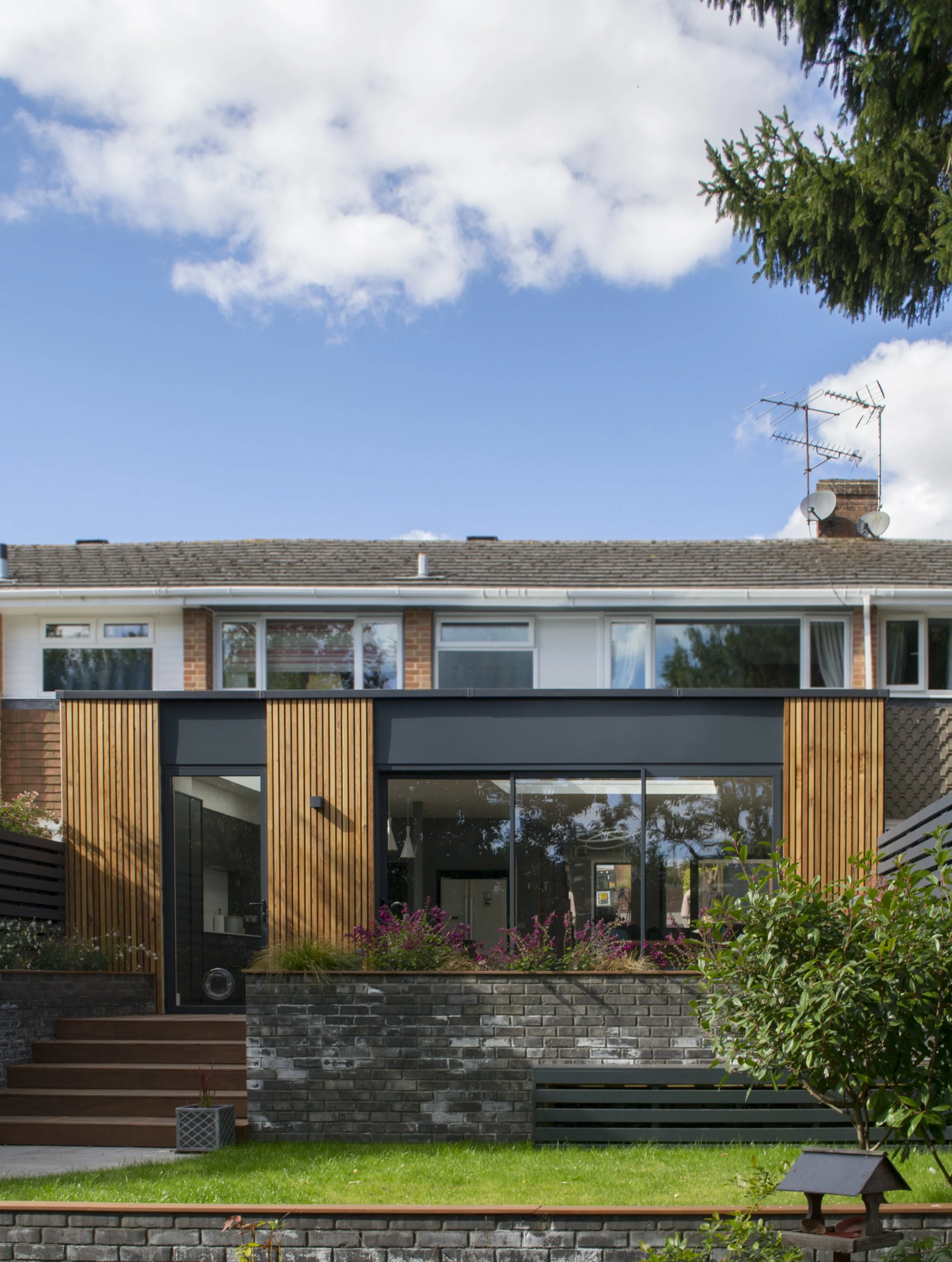
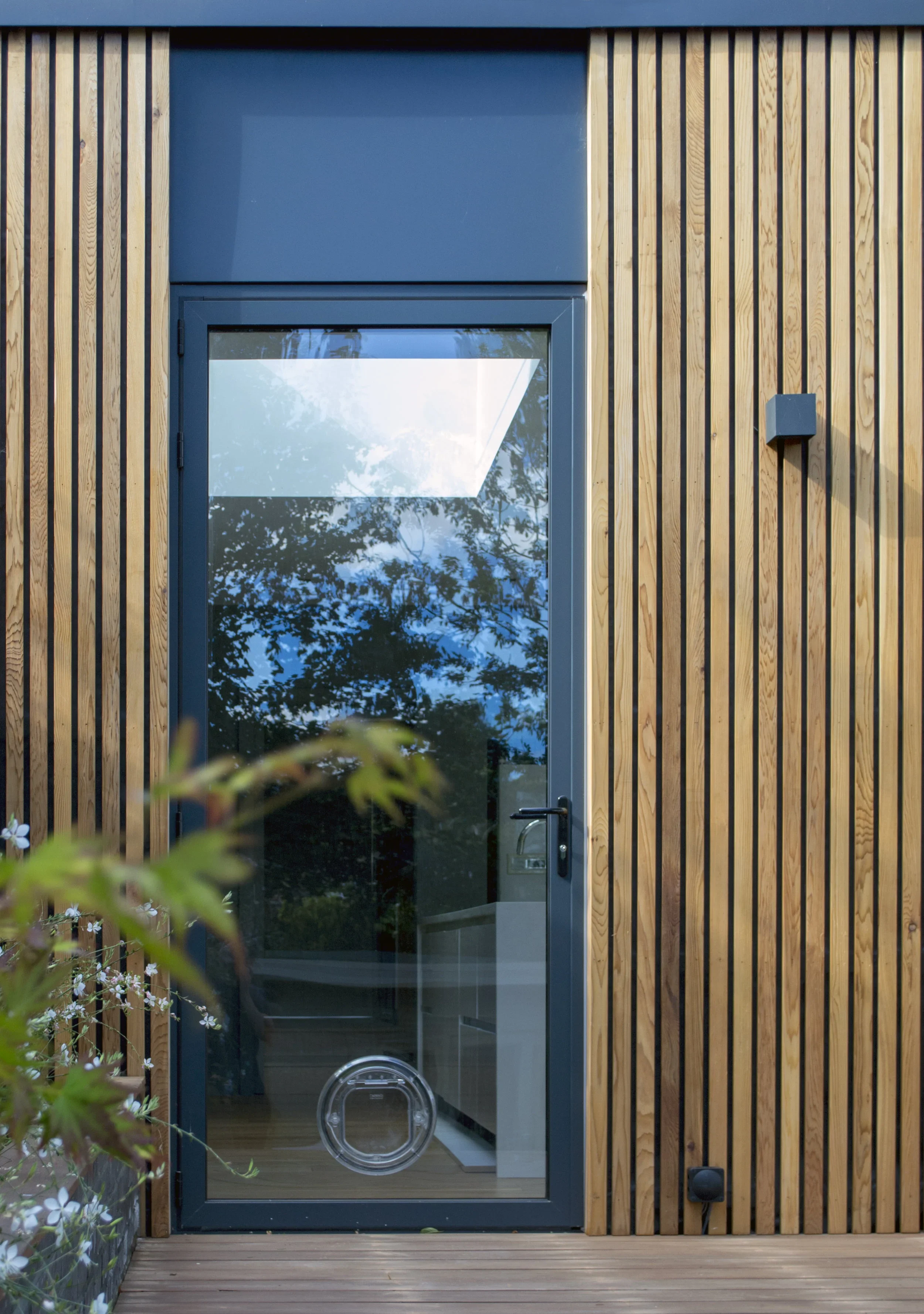
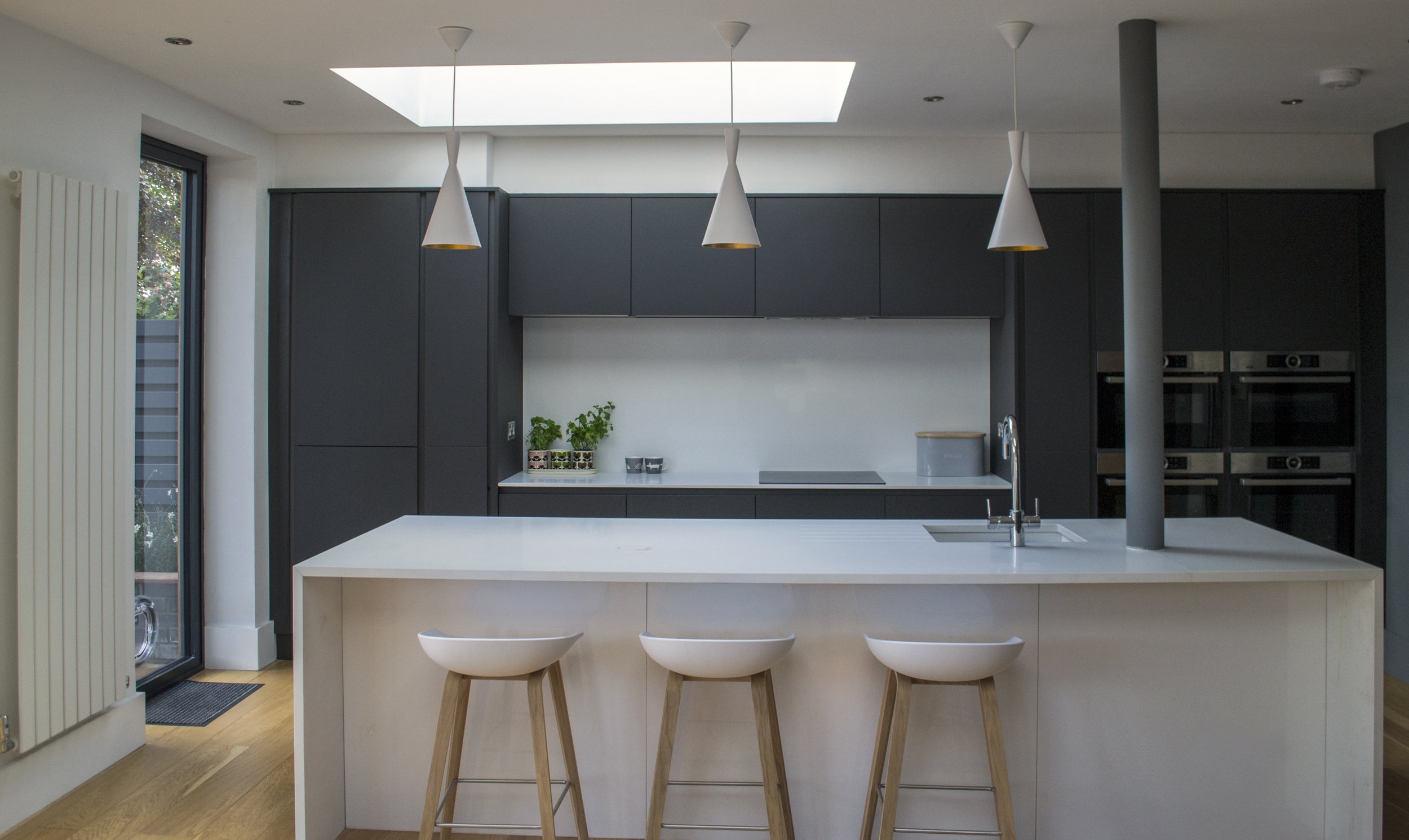
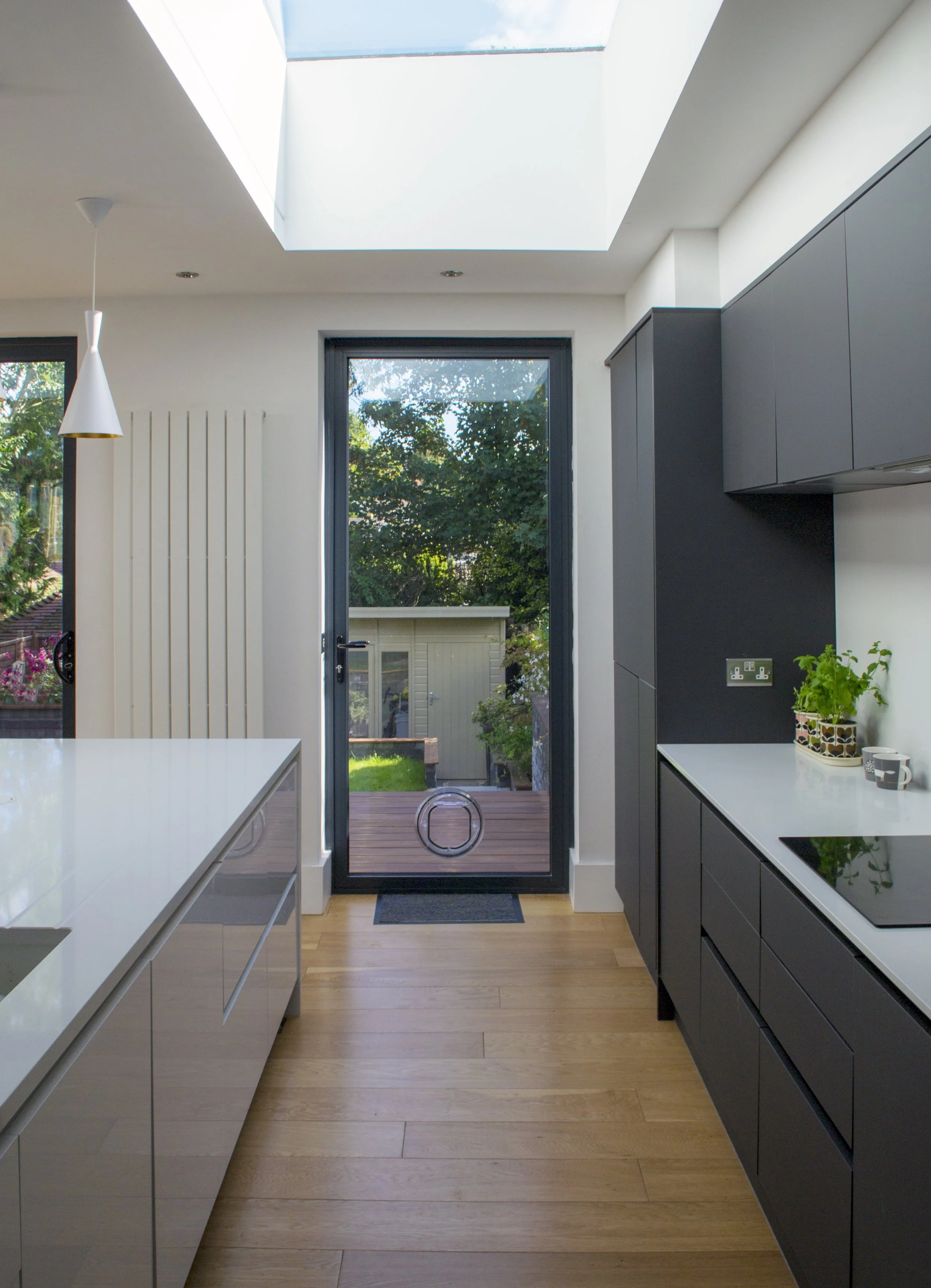
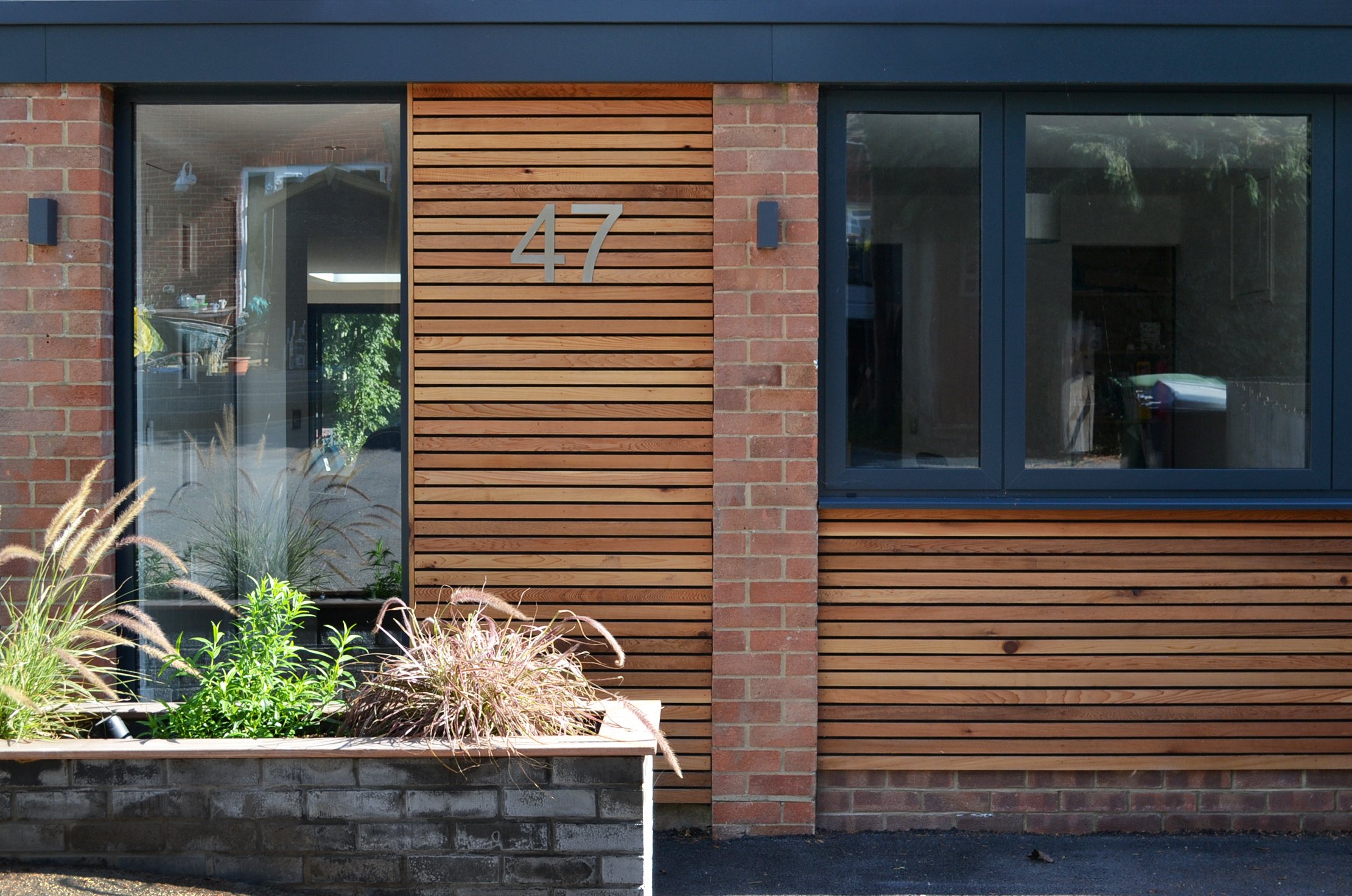
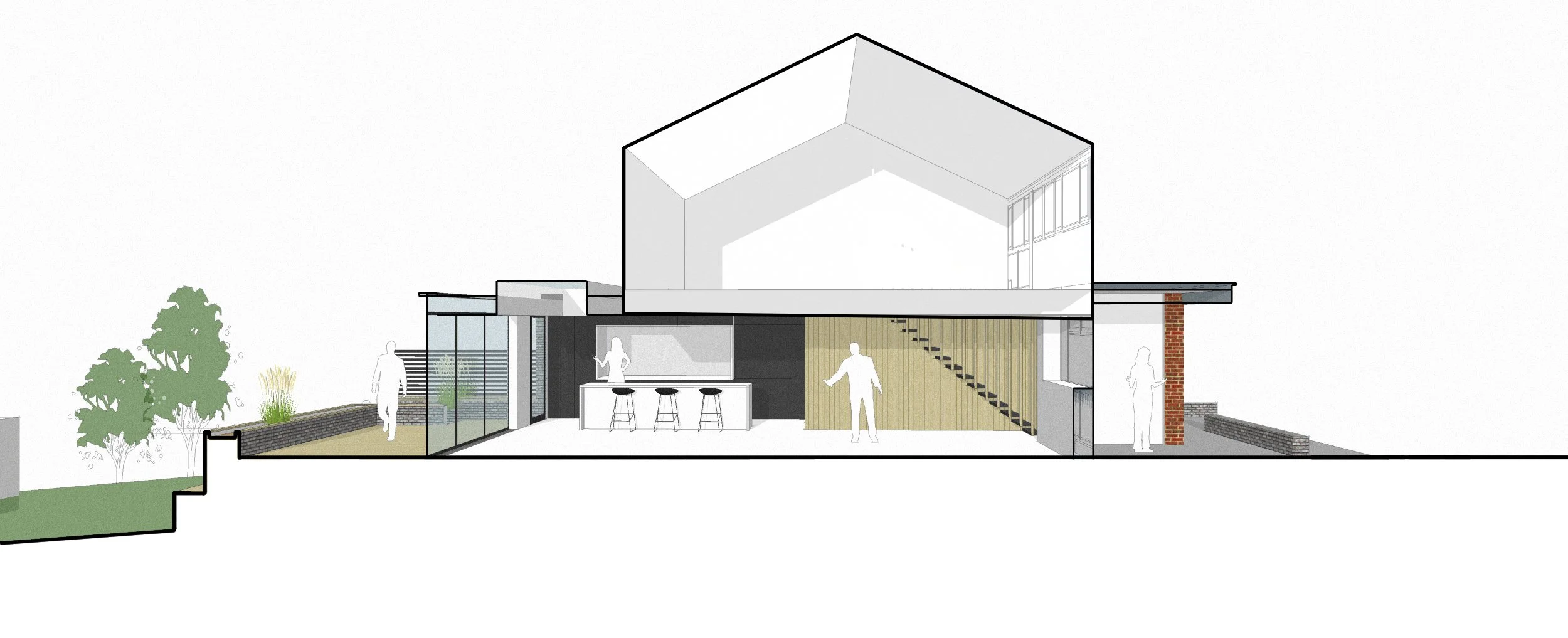
The solution involved converting the existing garage into a front-facing office, bringing functionality to the street edge while retaining a clear separation between work and domestic life. To the rear, the ground floor was opened up to create a continuous kitchen, dining, and living space, designed to support informal entertaining and daily family use. Large openings improve visual and physical connection to the garden, drawing light deep into the plan.
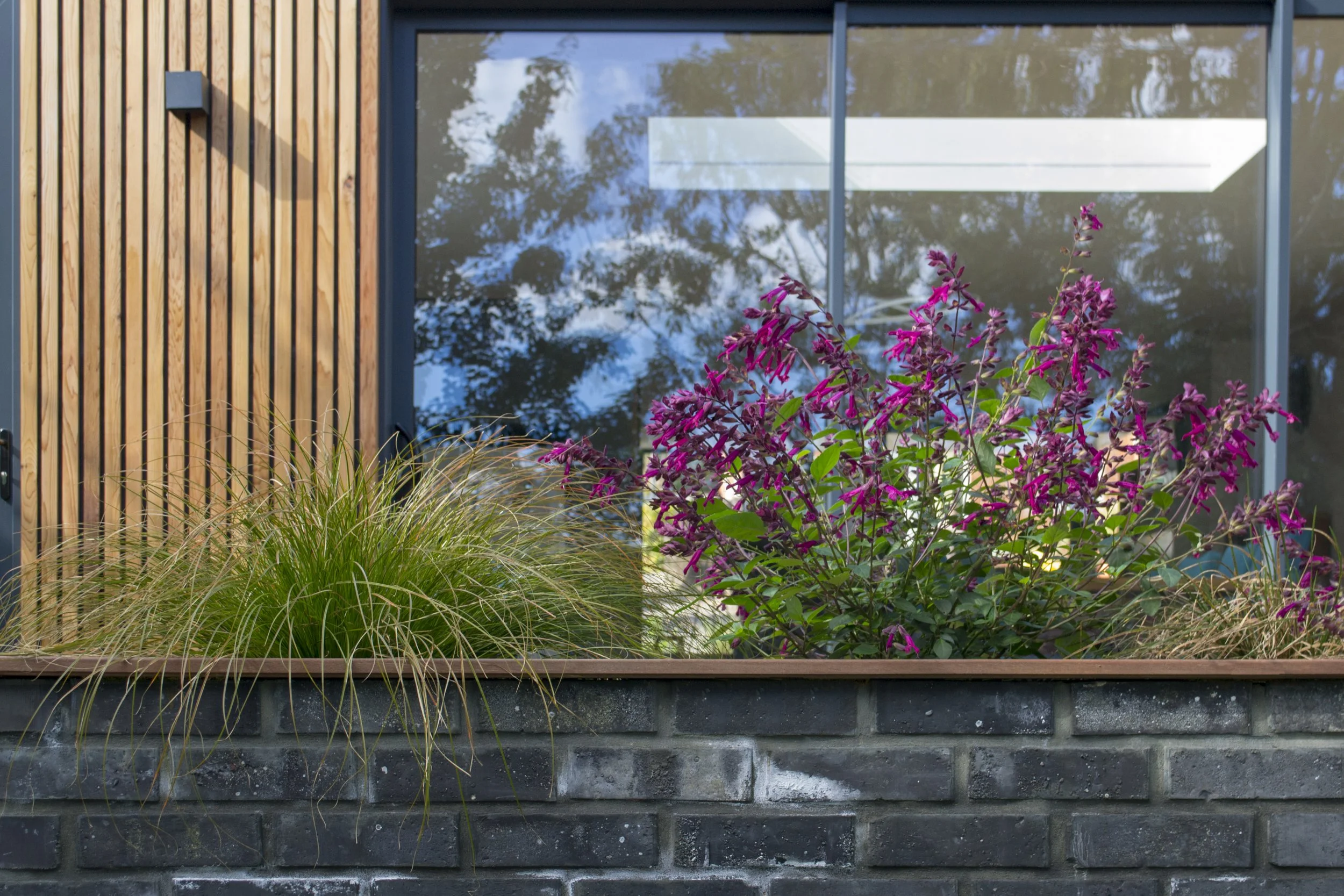
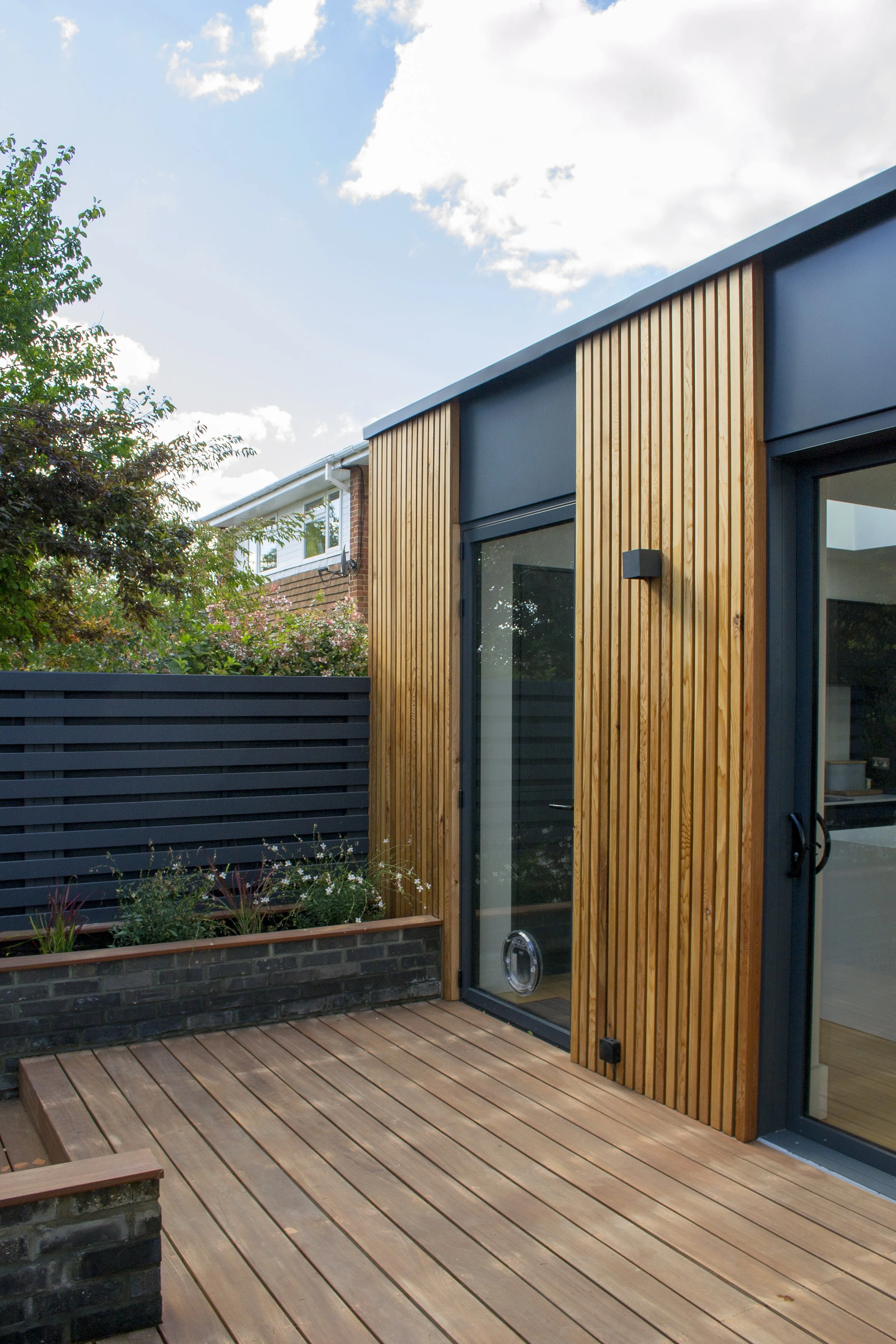
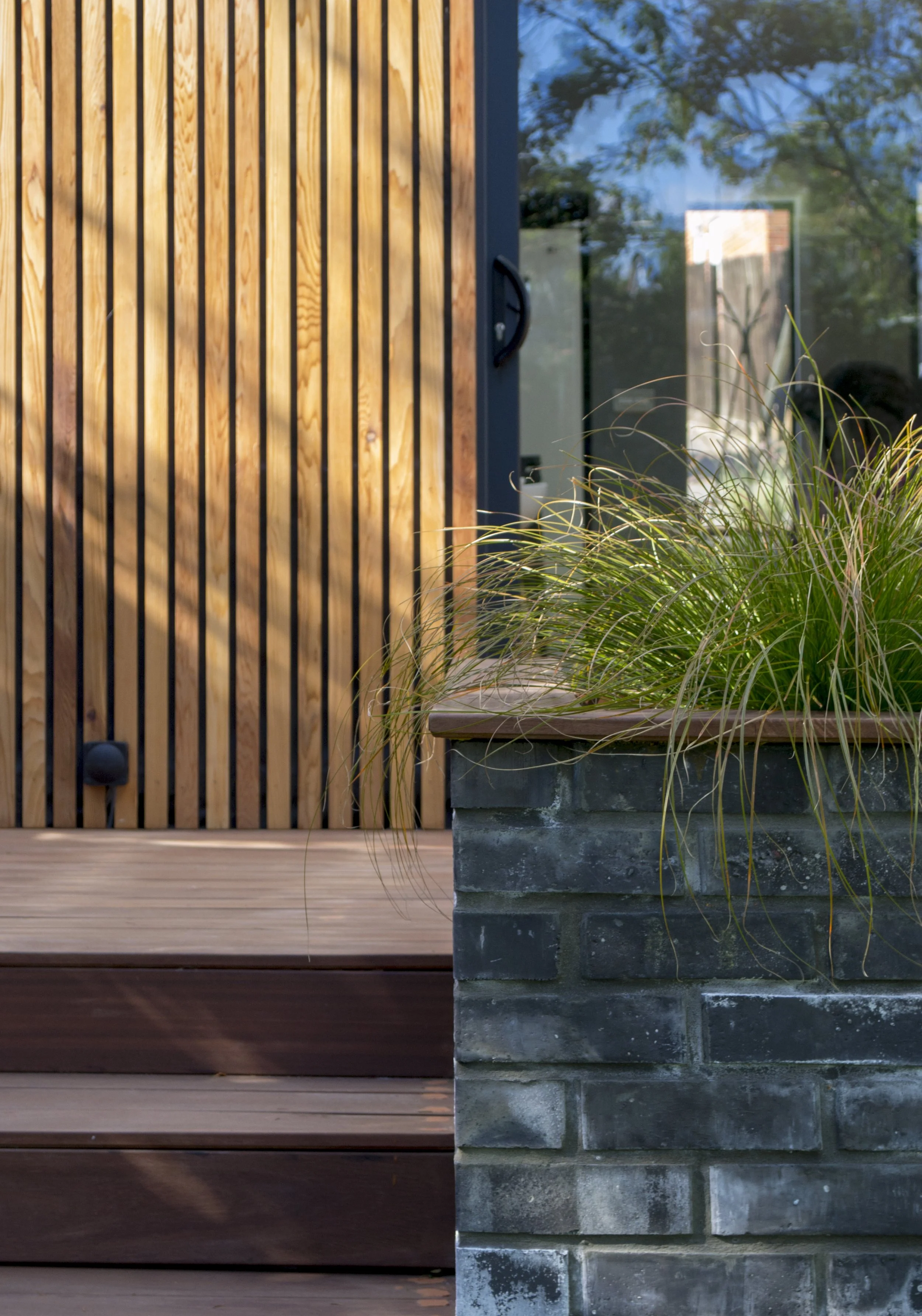
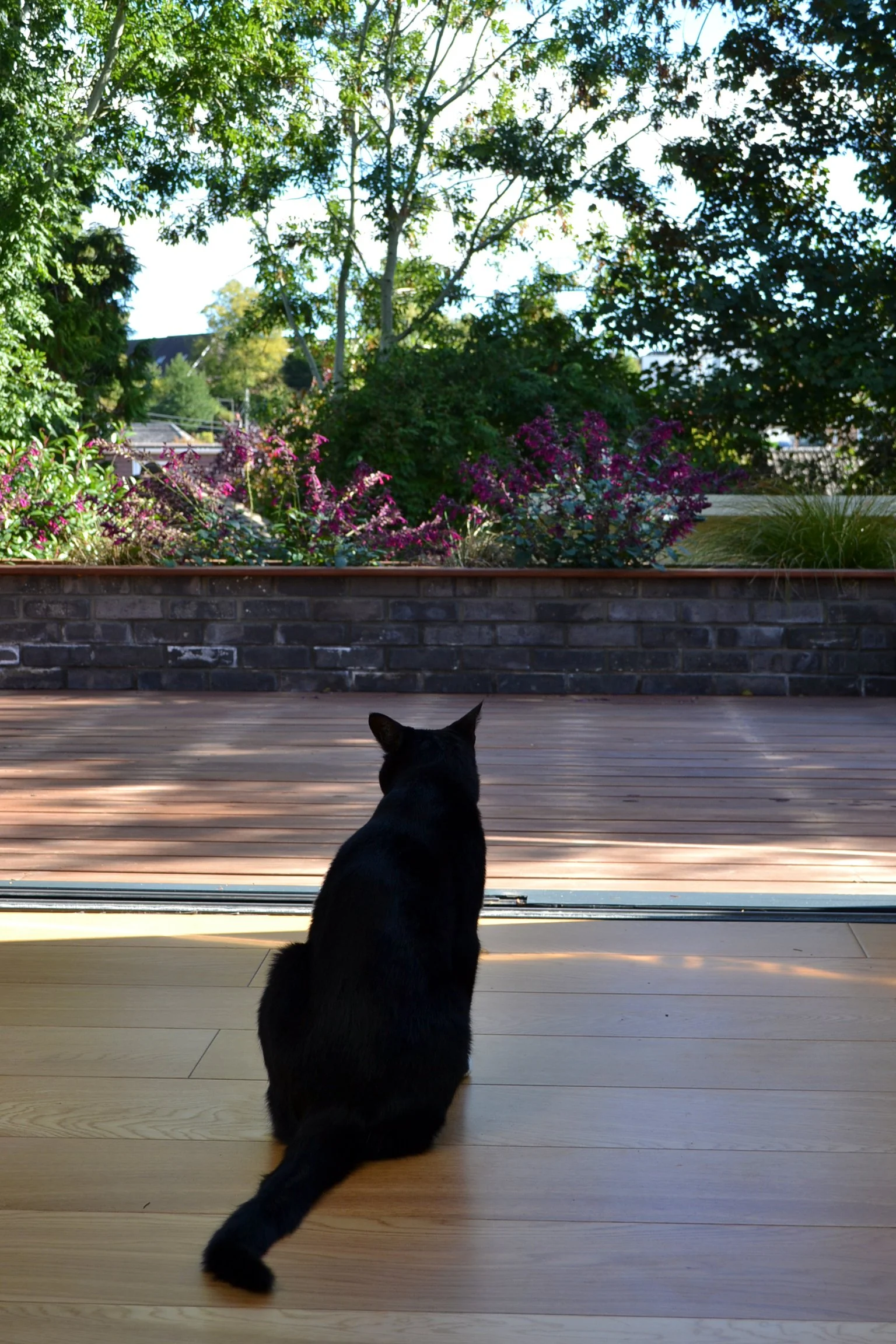
Externally, the sloping garden is reworked through a series of level changes, incorporating raised decking and integrated planters. These elements step with the terrain, creating usable terraces that extend the living space outward while managing the change in level in a coherent and usable way.
The result is a brighter, more connected home that rebalances the relationship between front and rear, internal and external space, and work and living functions.